
When the Road Stops, Your Cold Chain Can’t
When the Road Stops — Your Cold Chain Can’t
The scenes coming through from drivers on the ground right now are something else. Wind gusts topping 100km/h. Roads turned into rivers. Towns completely cut off. The Western and Eastern Cape are taking the worst battering in a generation, and a national disaster has been declared across multiple provinces.
For logistics operators, this is where the real test begins.
The Western and Eastern Cape Under Siege
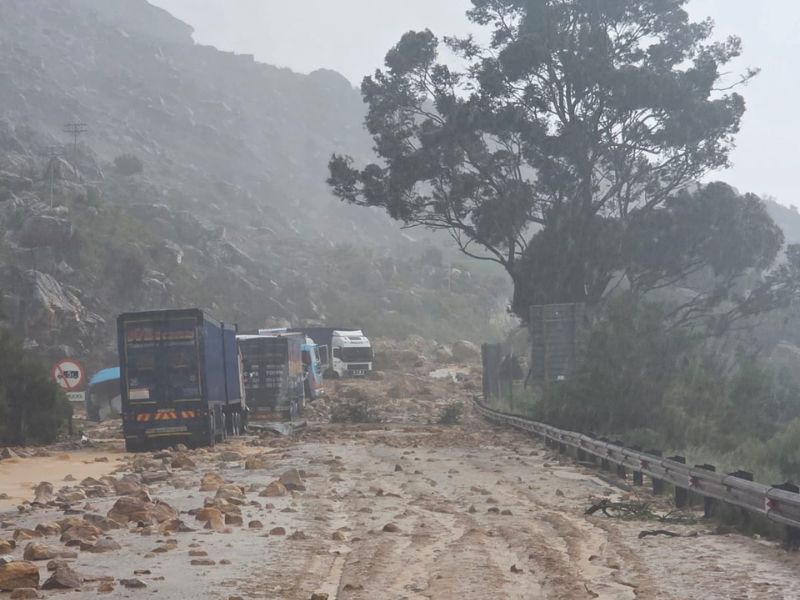
Since 4 May 2026, a combination of heavy rainfall, thunderstorms, damaging winds and snowfall has battered the Western Cape, Eastern Cape and several other provinces. In Cape Town, wind gusts reached up to 117km/h, the Huguenot Tunnel was closed due to mudslides, and flooding was reported across at least 26 informal settlements. Schools across the Western Cape closed for safety. Over 10,000 structures were damaged.
In the Eastern Cape, the story is just as severe. Over 200 families were left stranded in the Baviaanskloof area with roads and bridges completely impassable. The Garden Route experienced its worst flooding in 30 years, with at least 45 roads closed and communities isolated. Damaging waves were reported along the coast between East London and Port Edward.
This is not a one-day weather event. This is a sustained, multi-front crisis that has brought large parts of the south coast to a standstill.
What This Means for Cold Chain
When a truck is stranded for hours — or longer — waiting for conditions to clear, the cargo doesn’t know it’s in a storm. Dairy doesn’t negotiate. Meat doesn’t care that the mountain pass is closed.
This is precisely when a cold chain operator’s preparation is either proven or exposed.
The questions every client should be asking right now:
- Is your operator’s temperature monitoring active and logging throughout the delay?
- Is the refrigeration unit running independently of the drivetrain?
- Do drivers have a clear protocol for extended stationary periods?
- Is the fleet’s service history current — or was maintenance quietly pushed to next month?
Cold chain failure doesn’t happen at a depot on a clear day. It happens at 2am on a closed pass in 100km/h winds. That’s exactly when the difference between a maintained, prepared fleet and a neglected one becomes very expensive.
LMC Express: Built for Exactly This
At LMC Express, we’ve ticked every box. Our vehicles are built and maintained to hold temperature through delays, detours, and disasters. Our drivers are trained for extended stationary periods. Our monitoring doesn’t sleep.
Across the Western and Eastern Cape — in conditions like these — your package stays cool. That’s not a marketing line. That’s the guarantee.







Leave a Reply