
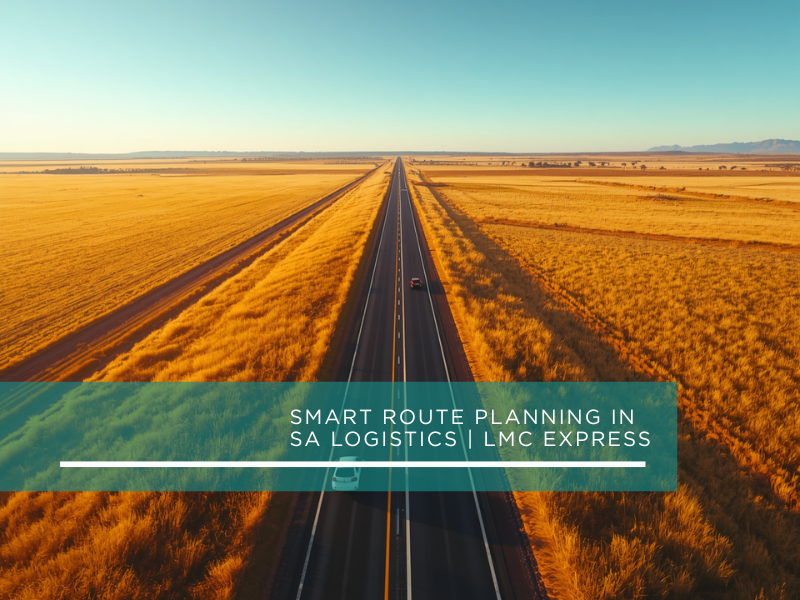
Smart Route Planning in SA Logistics | LMC Express
Every minute a truck sits in Johannesburg traffic or takes an unnecessary 40km detour, it costs your business money. Fuel burns. Driver hours accumulate. Customers wait. In South Africa’s demanding logistics environment — where road conditions, load shedding, and peak congestion can derail even the best-laid plans — the difference between a profitable delivery and a costly one often comes down to how well the route was planned before the truck left the yard.
Smart route planning isn’t a nice-to-have. It’s the engine behind every efficient freight operation.
Why Route Planning in South Africa Is More Complex Than It Looks
Logistics isn’t just about trucks and trailers. It’s about decisions — thousands of them, made before a single wheel turns. Route planning determines which roads to use, when to travel, how loads are sequenced, and how to respond when things go wrong.
Poorly planned routes mean wasted fuel, late deliveries, and frustrated customers. They mean drivers clocking unnecessary overtime, vehicles taking on extra wear, and margins shrinking kilometre by kilometre. For businesses shipping perishable goods, retail stock, or time-sensitive industrial supplies, the stakes are even higher.
In South Africa specifically, the challenges are real: load shedding disrupts traffic signals, construction detours appear overnight, and weather events can close major national routes without warning. Businesses that treat route planning as an afterthought pay for it — literally.
How Technology Is Transforming Route Optimisation in SA Logistics
Modern route optimisation software and GPS tracking have changed what’s possible for transport providers across South Africa. These aren’t luxury tools anymore — they’re baseline requirements for any operation that wants to stay competitive.
Smart logistics technology allows transport teams to:
- Monitor vehicle locations in real time across the national network
- Identify and avoid traffic bottlenecks before they cause delays
- Adjust routes dynamically when conditions change on the road
- Communicate accurate, updated ETAs directly to customers
- Analyse route performance after each run to continuously improve
When load shedding hits and traffic signals go dark, or when an accident closes the N3 on a Friday afternoon, the ability to reroute in real time isn’t just useful — it’s what separates reliable transport providers from the rest.
The Business Case: What Better Route Planning Actually Saves You
Smart route planning in South Africa delivers measurable returns. For businesses that depend on freight transport, the benefits show up quickly:
- Lower fuel costs — fewer kilometres travelled means less fuel burned, and fuel remains one of the biggest variable costs in transport
- Fewer missed delivery windows — optimised routes reduce delays and keep your customers happy
- Better fleet utilisation — smarter sequencing means more drops per vehicle, per day
- Reduced vehicle wear — avoiding unnecessary mileage extends vehicle life and cuts maintenance costs
- Stronger customer relationships — consistent, on-time delivery builds trust that repeat business is built on
Every kilometre saved isn’t just a cost saving — it’s a competitive advantage.
Smarter Route Planning With LMC Express
At LMC Express, route planning is built into how we operate — not bolted on as an afterthought. We combine industry experience with modern logistics technology to move freight efficiently across South Africa’s national road network.
Whether we’re managing temperature-sensitive consolidation loads or coordinating multi-drop freight runs, we plan routes that work commercially, logistically, and operationally. Our goal is straightforward: your freight arrives on time, in condition, every time.
Frequently Asked Questions
How does route optimisation reduce logistics costs in South Africa?
By minimising unnecessary travel distances, avoiding congested corridors, and improving fleet utilisation, route optimisation reduces fuel consumption, driver overtime, and vehicle wear — all of which directly lower your transport costs. Over a full year, the savings are substantial.
Can real-time route adjustments help during load shedding?
Yes. When load shedding disrupts traffic signal timing and increases congestion in specific areas, real-time route monitoring allows drivers to avoid affected zones and maintain delivery schedules. Having a logistics partner with live tracking capability is particularly valuable during high-frequency load shedding periods.
What should I look for in a logistics provider’s route planning capability?
Look for GPS tracking and route optimisation software, proactive communication on ETAs and any delays, and a proven track record of on-time delivery performance across South Africa’s road network. A transport partner that plans intelligently is one that protects your supply chain — not just your current shipment.
Ready to work with a logistics partner that plans every move with precision? Contact LMC Express today to discuss your freight requirements and find out how smarter route planning can improve your supply chain performance.








Leave a Reply