
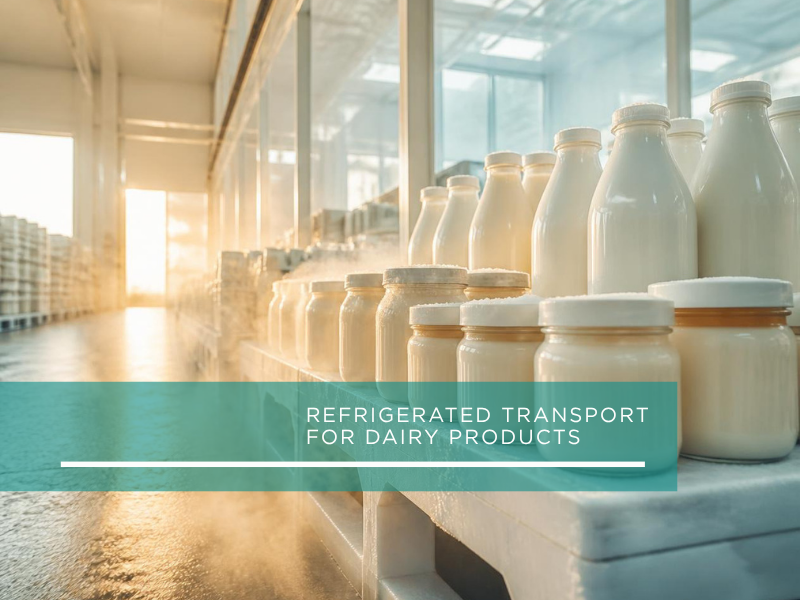
Refrigerated Transport for Dairy Products: Keeping It Cold, Fresh and Moving
Spoilt milk. Rejected yoghurt. A load of cream that never made the shelf. For any business moving dairy products through South Africa’s supply chain, these are not hypothetical risks. They are real losses that happen when cold chain logistics fall short.
Dairy is one of the most temperature-sensitive product categories on the market. Fresh milk, yoghurt, cream, butter and cheese all have narrow temperature windows that must be maintained from production facility to warehouse, retailer or foodservice kitchen. When that window closes, even briefly, the consequences show up as spoilage, rejected deliveries and avoidable waste.
Getting refrigerated transport for dairy products right takes more than loading product into a refrigerated vehicle and hoping for the best.
Why Temperature Control Is Critical for Dairy Products
Most chilled dairy products need to be kept between 2°C and 6°C throughout the supply chain. Frozen dairy products like ice cream and frozen butter require consistent sub-zero conditions. Any fluctuation in temperature during loading, transit or offloading can accelerate bacterial growth, reduce shelf life and compromise product quality.
What makes dairy particularly unforgiving is the pace at which temperature-related damage becomes irreversible. A few hours outside the correct range is often enough to trigger spoilage. Once that happens, there is no recovering the load.
For retailers, this means a rejected delivery and an empty shelf. For manufacturers and distributors, it means direct financial loss and potential damage to supplier relationships built over years.
What Effective Refrigerated Dairy Transport Actually Involves
Reliable cold chain transport for dairy is not just about the truck. It involves every stage of the process:
- Pre-cooling the vehicle before loading to prevent warm air contaminating the load
- Correct stacking and loading to allow adequate airflow around the product
- Minimising door-open time during loading and offloading
- Route planning to reduce transit time and limit exposure to ambient heat
- Real-time temperature monitoring throughout the journey
- Trained drivers who understand cold chain protocols and can identify problems before they escalate
Every one of these steps matters. A breakdown in any single step creates a risk point, and in dairy logistics, risk points cost money.
Reducing Dairy Spoilage and Protecting Your Margins
Dairy products carry some of the shortest shelf lives in the food supply chain. A product that arrives even 24 hours late, in sub-optimal condition, may already be outside the retailer’s acceptable use window. That means a rejected delivery, direct financial loss for the manufacturer and an empty gap on the retailer’s shelf.
Efficient, temperature-compliant refrigerated transport for dairy products reduces that risk significantly. Products that move quickly, stay cold and arrive on time give businesses the best possible chance of maintaining freshness, meeting quality standards and keeping customers satisfied.
For businesses operating in the dairy supply chain, whether you are a producer, a distributor or a foodservice operator, the logistics partner you choose has a direct impact on your waste levels, your margins and your reputation.
LMC Express: Refrigerated Transport for Dairy Across South Africa
At LMC Express, we specialise in multi-temperature refrigerated transport across South Africa. Our fleet is equipped to handle chilled and frozen dairy products, from milk and yoghurt to cream, butter and cheese, with the precision that temperature-sensitive goods demand.
We offer load consolidation solutions that allow dairy businesses to move product efficiently without waiting for full truckloads. That means faster transit, fewer delays and better freshness outcomes for your products.
From collection to final delivery, our focus is simple: keep your dairy products cold, fresh and moving.
Frequently Asked Questions About Dairy Cold Chain Transport
What temperature should dairy products be transported at?
Most fresh dairy products, including milk, yoghurt, cream and soft cheeses, should be maintained between 2°C and 6°C throughout transit. Frozen dairy products such as ice cream require consistent temperatures below -18°C. The appropriate range may vary depending on the specific product and your retailer or distributor’s requirements.
Can LMC Express handle both chilled and frozen dairy products?
Yes. LMC Express operates multi-temperature refrigerated vehicles capable of handling both chilled and frozen dairy products. Our load consolidation model allows businesses to move mixed dairy loads efficiently without compromising temperature integrity for either product type.
How do I know my dairy load will stay cold throughout the journey?
LMC Express uses temperature-monitored vehicles and trained drivers who follow strict cold chain protocols at every stage. From pre-cooling the vehicle before loading to real-time monitoring during transit, we maintain the cold chain throughout. Temperature documentation is available on request to support compliance and quality assurance requirements.
Reliable refrigerated transport for dairy products starts with the right logistics partner. If your business moves chilled or frozen dairy across South Africa, get in touch with the LMC Express team today to discuss how we can support your cold chain.











Leave a Reply