
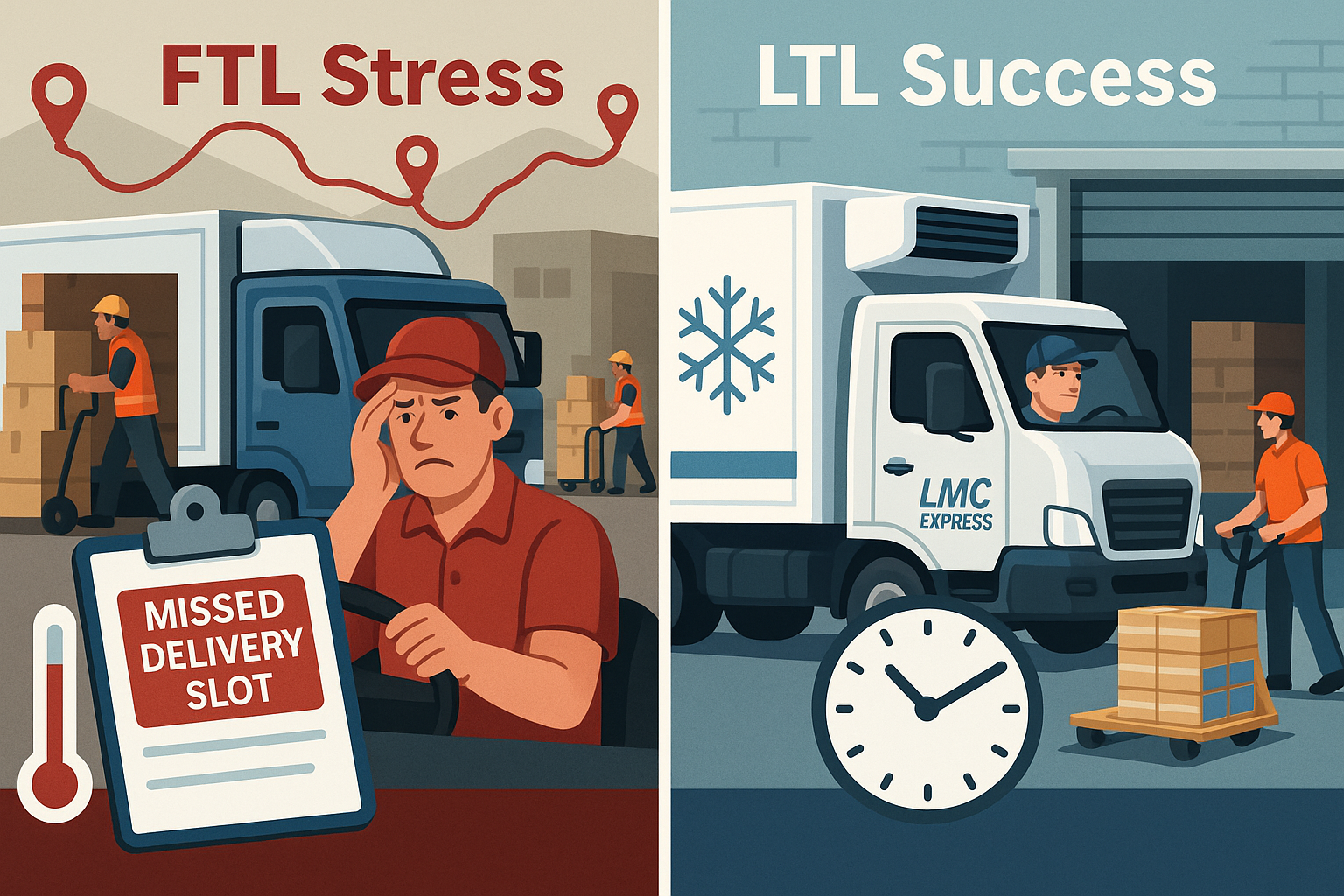
Why Full Truckloads with Multiple Deliveries Could Be Hurting Your Business
For many small and medium-sized food manufacturers, sending full truckloads (FTLs) with multiple delivery points might seem like the most cost-effective way to move goods. However, this traditional approach can come at a hidden cost — especially when dealing with time-sensitive, perishable products destined for demanding retail distribution centres (DCs).
At LMC Express, we’ve seen firsthand how this model can lead to inconsistent service, increased rejection risk, and frustrated customers. Here’s why.
1. Delayed Order Dispatch
One of the biggest operational inefficiencies of the full truckload model is the wait time required to fill the truck before it can leave. This delay slows down order turnaround and can frustrate your retail buyers — particularly when they’re expecting regular replenishment of chilled goods. In fast-moving retail environments, speed matters.
2. Missed Time Slots at Retail DCs
Retailers like Shoprite, Clicks, and Dischem run on strict booking systems. When you use a multi-drop FTL model, any delay at an early delivery point — such as long offloading times or congestion — can cause you to miss your allocated delivery slot at the next DC. This often leads to penalties, stock rejections, or a requirement to rebook (which could push your delivery back by days).
3. Cold Chain Risks
With perishable food, maintaining cold chain integrity is critical. In a long multi-drop route, your products may spend hours in transit after temperature-controlled doors are opened and closed multiple times. Each stop increases the risk of temperature fluctuations — a leading cause of rejections and spoilage.
4. Lack of Delivery Control
When your product is one of several drops on an FTL route, you lose control over when and how your goods are delivered and offloaded. If your stock is at the back of the truck, it’s last to come off — and it may not be handled with the same level of care. This affects quality and brand perception, especially at larger DCs.
A Smarter Alternative: LTL Transport with LMC Express
The good news? There’s a better way.
At LMC Express, we specialise in Less-than-Truckload (LTL) refrigerated transport, purpose-built for food manufacturers supplying retailers. Our model is designed to offer the flexibility, speed, and care that your products — and your customers — deserve.
Here’s what you gain:
- Daily dispatches — no need to wait to fill a truck.
- Dedicated DC deliveries — we know the systems and book your slots on time.
- Specialised DC unpacking and sorting — we handle multi-SKU pallets and multiple purchase orders the right way.
- Lower risk, better consistency — fewer delays, no unnecessary stopovers, and improved cold chain control.
- Scalable pricing — only pay for the space you use.
Reassess Your Transport Strategy
In a market where service consistency and responsiveness are critical, relying on outdated full truckload models with multiple drops may be doing more harm than good. If you’re serious about reducing delays, avoiding rejections, and keeping your customers happy, it’s time to consider a smarter, more reliable LTL solution.
Talk to LMC Express today about how we can help you move smarter, faster, and more efficiently — without the pressure of filling a full truck.






Leave a Reply