

Frozen Food Transport in Winter SA | Cold Chain | LMC Express
Winter in South Africa doesn’t feel like it should be a problem for frozen food transport. Temperatures drop, cold air arrives across the Highveld and Cape, and it seems logical that refrigerated logistics should get a little easier. It doesn’t. Winter introduces a specific set of risks that catch businesses off guard precisely because they’re not expecting them — and the consequences for frozen product quality can be just as serious as they are in the heat of summer.
Understanding what winter actually does to the cold chain is the first step to managing it well.
Why Frozen Food Transport in Winter Still Requires Precise Temperature Control
The most common misconception is that refrigeration equipment doesn’t need to work as hard when it’s cold outside. But frozen goods don’t care about ambient temperature — they require consistent, precise conditions throughout transit, regardless of what the thermometer says at the roadside.
The real risk isn’t ambient cold. It’s temperature fluctuation — particularly during loading and unloading, when cargo moves between a controlled environment and an uncontrolled one. Even brief exposure outside the required temperature range can compromise food safety, accelerate microbial activity, and reduce shelf life. These windows are just as dangerous in winter as in any other season.
Condensation: The Winter Cold Chain Problem Nobody Talks About
When frozen products move between temperature environments — from a blast freezer into a loading bay, or from a refrigerated unit into a distribution centre — condensation forms on packaging and pallets. This is a year-round concern, but winter temperature differentials can make it more pronounced.
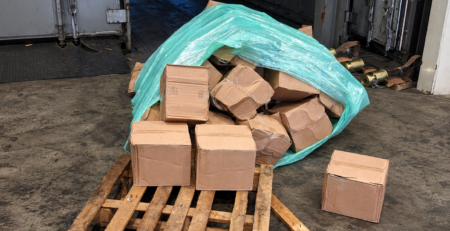
Moisture weakens cardboard packaging, smears labels, and makes pallets difficult to handle safely. In severe cases, condensation refreezes on contact with frozen surfaces, creating ice accumulation that complicates loading, unloading, and stock management. A pallet that looked fine in the vehicle can become a handling hazard within minutes of being moved into a warmer environment.
Managing this requires careful attention to transition protocols — controlling how and where frozen goods move between environments, and ensuring packaging is specified to handle these conditions.
How South African Winter Weather Disrupts Cold Chain Schedules
South Africa’s winter brings heavy rain in the Western Cape, dense fog across the Highveld, and strong winds that reduce visibility and slow traffic on major freight corridors. These conditions directly affect delivery schedules — and every additional hour a frozen product spends in transit is an hour the cold chain must be maintained under pressure.
Delays compound risk. A route that normally takes six hours may take eight or nine in poor winter conditions. If the cold chain isn’t actively monitored and managed throughout that extended journey, product integrity suffers.
This is why real-time temperature monitoring and adaptive route planning aren’t optional extras in winter — they’re operational necessities. Knowing where a load is, what temperature it’s sitting at, and whether it’s been compromised in transit allows for fast decisions that protect both the product and the customer relationship.
Equipment Reliability in Winter: No Room for Assumptions
A refrigeration unit that performed well through summer doesn’t automatically perform well in winter. Cold ambient temperatures affect how equipment operates, and components that are worn or under-maintained may not respond as expected when conditions change.
Regular pre-season servicing, rigorous vehicle inspections before every trip, and continuous temperature monitoring throughout transit are non-negotiable. The assumption that “it’s cold enough outside anyway” is exactly the thinking that leads to a ruined load and a very difficult conversation with a customer.
Protecting Frozen Product Quality From Origin to Destination
Customers who entrust their frozen inventory to a logistics provider have a simple expectation: it arrives exactly as it left. Meeting that expectation in winter requires the same discipline it requires in any other season — and in some respects, more.
Proper loading practices, well-maintained equipment, calibrated temperature monitoring, and trained handling teams are what separate a cold chain operation that delivers on its promise from one that crosses its fingers and hopes winter cooperates.
At LMC Express, maintaining frozen food integrity across South Africa’s seasons is what we do. Our multi-temperature fleet and real-time monitoring systems are built to protect your product — whether it’s a winter’s morning in Cape Town or a warm afternoon in Johannesburg.
Frequently Asked Questions
Does South African winter weather actually affect frozen food transport?
Yes — significantly. Rain, fog, and wind on key freight routes extend transit times and increase the pressure on cold chain management. Temperature fluctuations during loading and unloading also remain a concern regardless of ambient conditions. Winter requires the same — and in some cases greater — cold chain discipline as summer.
What is the biggest risk to frozen goods during winter transport?
Temperature fluctuation during the transition between environments is the primary risk — particularly at loading and unloading points where cargo moves between controlled and uncontrolled conditions. Condensation and moisture damage to packaging is the second most common issue, especially when temperature differentials are large.
How do I know if my frozen goods have been temperature-compromised during transport?
Real-time temperature logging throughout the journey is the most reliable method. A reputable cold chain logistics provider will be able to supply a temperature record for the full duration of transit, confirming that products remained within spec from origin to destination. If a provider can’t offer this, that’s a red flag worth addressing before winter freight season begins.
Don’t leave your winter cold chain to chance. Contact LMC Express to find out how our refrigerated transport and real-time monitoring solutions keep your frozen products protected — every season, every kilometre.







Leave a Reply